Hydration is not the same as barrier repair
Why water-binding layers and barrier lipids do different jobs—and which to prioritize after procedures.
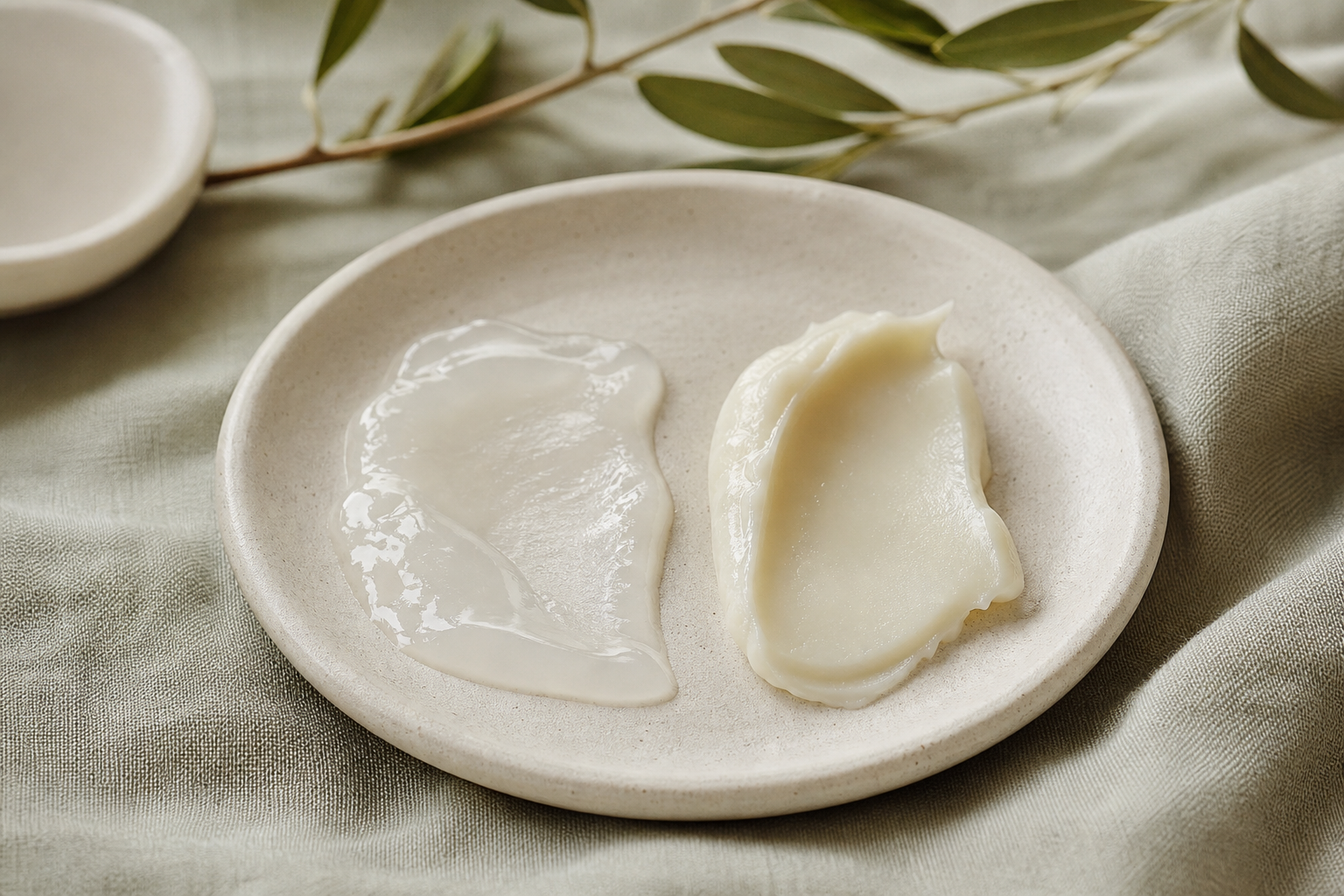
Hydrating ingredients increase water content in the outer skin. Barrier-supporting care reduces water loss and friction sensitivity. After procedures, confusing the two often leads to sticky layering without lasting comfort.
Practical distinction
- Hydration-focused: humectants that draw or hold water.
- Barrier-focused: lipids and occlusives that seal and reduce TEWL.
- Best post-procedure sequences usually pair a simple humectant step with a sealing moisturizer—not five competing serums.
If tightness returns quickly
Rapid rebound tightness after applying product often signals barrier debt more than “not enough essence.” Simplify, seal, and ask your clinician before escalating actives.
Water alone is not repair
Humectants pull water into the skin; barrier lipids help keep it there and reduce sting. When skin is reactive, a watery serum stack without occlusion can feel cooling briefly and worse later. Match the tool to the problem: dry-tight often needs barrier support, not another hydrating mist alone.
How to build a simple supportive routine
- Cleanse gently → hydrate if needed → seal with moisturizer/ointment → SPF by day.
- Limit to products your clinician already cleared for your pathway.
- Reassess weekly: less sting and less tightness mean the barrier is recovering.
Clinic context
After energy treatments, we often prioritize barrier integrity before returning to brightening or anti-aging actives. That order protects pigment stability and comfort more reliably than rushing aesthetic goals.
Key takeaways
- Water without seal is temporary.
- Post-procedure skin usually needs fewer, better-chosen layers.
- Bring product photos to consultation for precise sequencing advice.
Educational guidance for general aftercare and planning awareness. It does not replace personalized medical advice. Follow the written protocol from your AESTHINA STARERA clinician for your device, settings, and skin history.