IPL vs picosecond: matching tool to concern
How clinicians choose between IPL and picosecond approaches based on concern, skin type, and downtime—not trends.
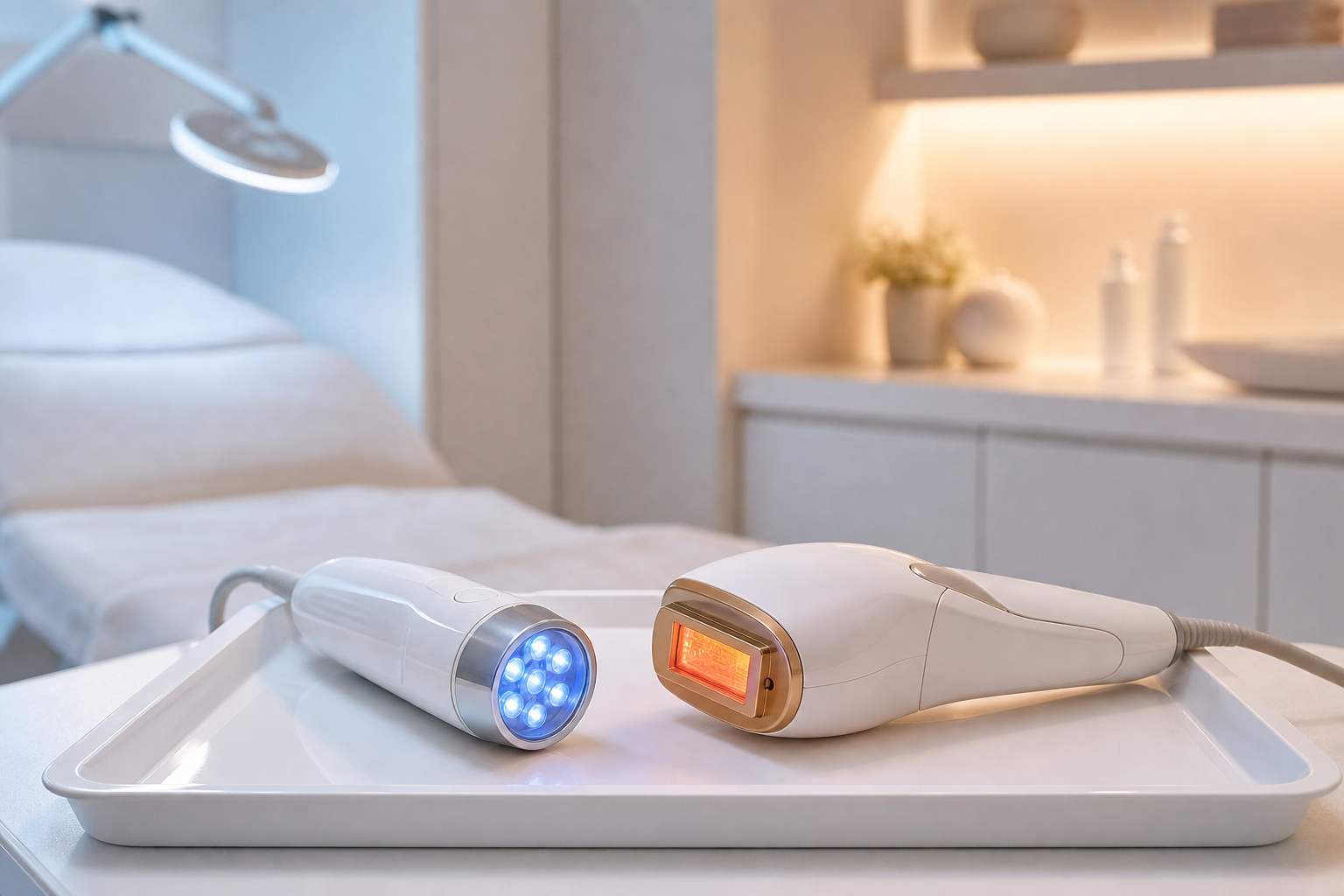
IPL and picosecond devices are different tools. Suitability depends on the target (diffuse redness, broader photodamage, discrete pigment, texture goals), skin type, history, and acceptable downtime—not on which modality is trending online.
Where IPL is often considered
IPL is frequently discussed for diffuse redness and broader photodamage patterns across larger areas. Settings and filters are selected carefully; not every redness presentation is an automatic IPL candidate.
Where picosecond approaches are often considered
Picosecond devices are often preferred for more targeted pigment concerns and certain texture goals, with downtime profiles that differ by indication and parameters. Your clinician will explain expected endpoints for your case.
Shared decision points
- Fitzpatrick type and pigment risk.
- Recent sun exposure and upcoming events.
- Prior response to light-based care.
- Home-care discipline, especially SPF.
Different tools, different pigment and vessel jobs
IPL uses broad pulsed light useful for diffuse redness and sun damage patterns. Picosecond lasers deliver ultra-short pulses often chosen for more focal pigment and selected texture goals. Neither is universally “stronger”—they are matched to indication.
How we choose in consultation
- Pattern: diffuse flush vs discrete spots.
- Skin type and pigment risk history.
- Downtime tolerance and event timing.
- Whether vessels, pigment, or texture is the primary endpoint.
Why online comparisons mislead
Device marketing lists overlap. Your face map, medications, and prior treatments matter more than a generic ranking. Expect a recommendation tied to your photos—not a one-line winner.
Key takeaways
- Modality follows diagnosis and goals.
- Comparison charts online cannot replace assessment.
- Ask what success looks like at each review visit.
Educational guidance for general aftercare and planning awareness. It does not replace personalized medical advice. Follow the written protocol from your AESTHINA STARERA clinician for your device, settings, and skin history.